From our base in Glossop (SK13) we handle garden installation in Simmondley (SK13), Hadfield (SK14), Charlesworth (SK13) and nearby Stalybridge, Hyde and Ashton-under-Lyne. We visit, measure and talk through the options with you first, then send a written, itemised quote for your Glossop garden.
Garden installation is the bed-building and planting service from Glossop Landscaping & Driveways. We cut new flower beds, build raised garden beds and plant native gardens for homeowners across Glossop, taking a plan or a plant list and turning it into a border that establishes in its first season. It is for people who want the digging, improving and planting done properly, rather than losing a weekend and half the plants to compacted ground.
Three services cover most requests. Flower bed installation is the traditional border, cut from lawn or rebuilt from a tired bed. Raised garden bed installation is for vegetables, cut flowers and anyone who wants to garden at a comfortable height. Native plant garden installation is for wildlife-friendly planting that suits your soil and the surrounding countryside.
We start every job by checking the soil and the drainage, because that decides how much preparation the bed needs. Then we dig, improve, plant at the right depth, water in and mulch. You get a written quote before we begin, a written guarantee on the planting, and care notes for the first two seasons.
Where We Offer Flower Bed Installation
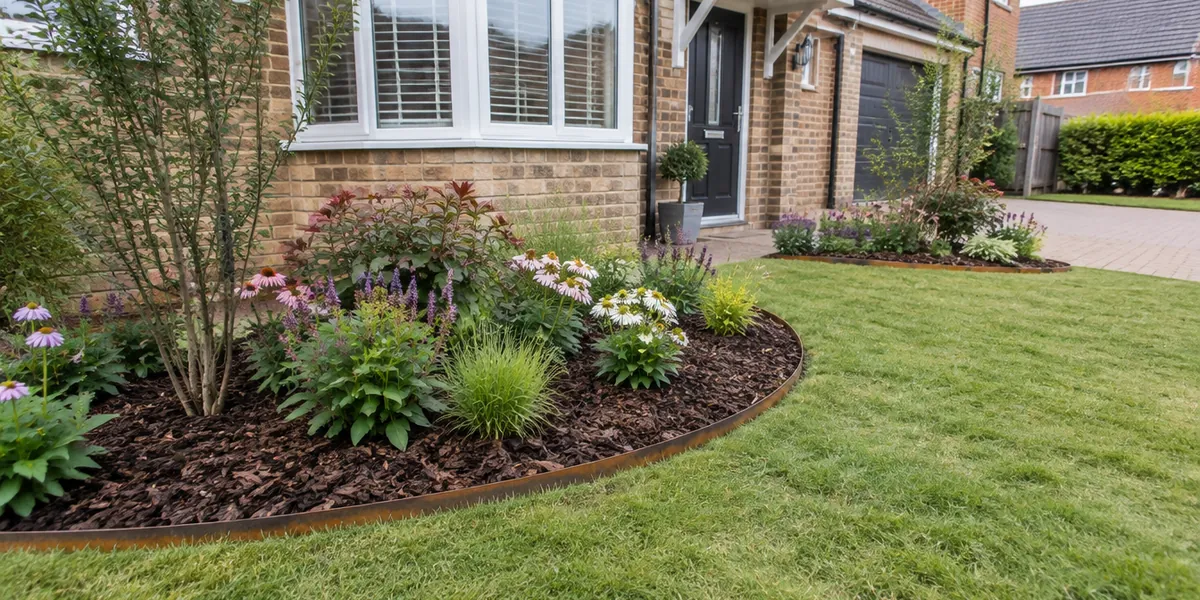
Flower bed installation is the creation of a new planted border, either cut fresh from a lawn or rebuilt from an existing bed that has gone over. It is the right choice when you want colour and structure along a fence, around a patio or down the side of a path, and when the existing soil has never been properly worked.
We mark the outline with a hose or line and cut the edge with a half-moon iron, so the bed has a clean shape from day one. Turf is lifted and stacked to rot down or taken away. The soil is dug to a full spade's depth, roughly 250 mm, and rubble, roots and builder's debris removed. On heavy clay we work in horticultural grit and plenty of compost or well-rotted manure; on light sandy ground it is organic matter alone to help the soil hold water.
Bed depth matters more than most people expect. A border under a metre deep never lets plants layer properly, so where the garden allows we cut beds 1.2 to 1.5 metres from front to back. Plants are set out in their pots first, adjusted by eye, then planted at the depth they grew in the pot and firmed in.
Watering in is thorough, not a quick spray, and the bed is finished with 50 mm of composted bark. October and March are the months we prefer for new borders in Glossop, when the soil is moist and roots can settle in before the heat.
Raised Garden Bed Installation
Raised garden bed installation means building a contained bed above ground level and filling it with a soil mix chosen for what you want to grow. It is the right choice for vegetables and cut flowers, for ground that is waterlogged or full of rubble, for sloping gardens, and for anyone who finds bending to soil level difficult.
We build raised beds in oak or softwood sleepers, treated timber boards, brick or rendered blockwork, depending on the look and the budget. Timber beds are lined with a breathable membrane on the inside faces to keep damp soil off the wood, and sit on a level base of compacted ground or a few centimetres of gravel. Vegetable beds are kept to 1.2 metres wide so the middle can be reached from either side without treading on the soil, and 300 to 450 mm high for root depth. Beds for gardening from a seat or wheelchair are built higher.
The fill is where most DIY raised beds go wrong. We use screened topsoil and compost in roughly two parts to one, never subsoil or whatever came out of the hole. Drainage holes or an open base let excess water escape, which matters in a Glossop winter.
Raised beds can be built in any month that is not frozen and planted straight away with vegetables in spring or bulbs and perennials in autumn. We can add a drip irrigation line, a cold frame lid or rabbit-proof mesh if your garden backs onto open ground.
Native Plant Garden Installation
Native plant garden installation is the planting of British species, from hedgerow shrubs and woodland-edge perennials to meadow mixes, in a way that suits the local soil and brings in wildlife. It is the right choice when you want a garden that supports bees, butterflies and birds, when you have a difficult damp or shady corner, or when you prefer a looser look than a formal border.
Preparation depends on the planting. For shrubs and perennials we dig and improve the ground as for a flower bed, with less compost because most natives prefer poorer soil. For a meadow we strip the turf and sometimes the top 50 to 100 mm of topsoil to reduce fertility, rake to a fine tilth and sow a wildflower mix suited to the soil, with yellow rattle to weaken the grasses. Plug plants fill in species that are slow from seed.
Plant choice follows the ground. On chalk we lean on knapweed, scabious and marjoram; on clay it is meadowsweet, ragged robin and purple loosestrife; in shade it is foxglove, red campion and wood anemone under hawthorn, hazel and guelder rose. A small pond with a shallow beach edge adds more wildlife than anything else.
Native plants need little feeding or watering once in, but they need a different rhythm of care, so we hand over a simple calendar: one meadow cut in late summer, hedges trimmed outside the nesting season, leaves left under the shrubs. All stock is of native British provenance, never from the wild.
Why Glossop Homeowners Choose Us for Garden Installation
We prepare ground properly. Most plant failures in Glossop gardens come from compacted soil, planting too deep or forgetting to water, and all three are avoidable. We dig the full depth, improve the soil, plant at the correct level and soak everything in before mulching.
We know how each soil behaves: clay that cracks in August and floods in January, chalk that drains in an hour, sandy ground that needs organic matter every year. Preparation and plant lists are adapted to what is in the ground, and if a plant you have chosen will not suit your bed we say so and suggest an alternative.
Raised beds are built to last, lined and filled with a proper growing mix. Native gardens are sown and planted at the right time of year.
You get a written quote with plants itemised, a written guarantee on the planting, and spoil removed under our registered waste carrier licence. Where a project also needs trees, hedges or mulching, our tree and shrub planting and ground cover installation services are done by the same team.
Our Garden Installation Process
- Site visit. We look at the proposed beds, check sun and shade, and go through your plan or plant list.
- Soil and drainage check. We dig a test hole, look at texture and pH, and decide what improvement the ground needs.
- Written quote. Preparation, materials, plants and labour set out line by line.
- Ordering. Plants, timber, topsoil and compost ordered for the planting window.
- Bed preparation. Turf lifted, ground dug and improved, raised beds built and filled, edges cut.
- Planting. Plants set out, planted at the right depth, firmed, watered in and mulched.
- Handover. Care notes for the first two seasons and a tidy site with all waste removed.
A single border takes a day; raised beds or a native garden with a meadow may take several. In Glossop we book planting for autumn or spring and build raised beds through the winter so they are ready for sowing in April.
What Affects the Cost of Garden Installation in Glossop
The size of the bed and the state of the ground set the baseline. A bed cut from a well-kept lawn needs less preparation than one dug out of a rubble-filled strip beside a new house. Heavy clay needs grit and compost; rooty ground under old shrubs needs clearing first.
Plant choice makes a big difference. A border of 2-litre perennials costs far less than one with mature specimen shrubs, and a seeded meadow is cheaper per square metre than plug plants. Planting density, set so the bed knits together within two seasons, also affects the total.
For raised beds, the material and height decide most of the cost: oak sleepers sit well above treated softwood, and a bed built for seated gardening uses more timber and fill. Topsoil and compost come by the bulk bag and the number rises quickly with bed size.
Access across Glossop gardens varies, and a terraced plot where everything comes through the house takes longer than one with side access for a barrow. Each item appears separately in the written quote.
Garden Installation Around Glossop
Our installers work across Glossop and the beds vary with the ground. In Hadfield and Charlesworth, if your soil is clay, it needs plenty of grit worked through before a flower bed will drain, while if your soil in Gamesley is lighter, native and drought-tolerant planting will thrive with little improvement. Raised vegetable beds are in demand in Simmondley and Padfield, and if your newer plot has builder's subsoil that makes growing in the ground a struggle, they are the answer. We cover every part of Glossop and nearby Stalybridge, Hyde and Ashton-under-Lyne.
Also available across Glossop include landscape installation.
Frequently Asked Questions
How deep should a new flower bed be dug?
A full spade's depth, around 250 mm, with compost or manure worked through and the subsoil below loosened with a fork if it is compacted. On heavy clay in Glossop we add grit as well. That depth is enough for perennials and most shrubs; trees and large shrubs get their own deeper planting holes.
What should I fill a raised bed with?
A mix of screened topsoil and good compost, roughly two parts to one, with the base left open or drilled so water can drain. Never use subsoil, builder's spoil or bagged multipurpose compost alone, which slumps and dries out. For vegetables we add a little well-rotted manure before the first season.
Will a wildflower meadow work in my garden in Glossop?
It depends on the fertility of the soil. Rich garden soil grows grass, not flowers, so we often strip the turf and top layer first and sow yellow rattle to weaken the grass. Poorer, drier ground gives better results. A meadow also needs patience: the second summer is usually the first good one.
Can you replant an existing border rather than starting from scratch?
Yes. We lift and keep anything worth saving, dig out perennial weeds and tired plants, improve the soil and replant with the keepers plus new stock. It is a good way to renew a border without losing its mature shrubs, and it is often done in autumn when the plants can be moved safely.
Do you offer maintenance after installation?
We do. Many clients in Glossop book a spring visit for weeding, a mulch top-up and a prune, and an autumn visit for cutting back and bulb planting. The care notes we hand over are enough to manage the bed yourself if you prefer, and we are a phone call away if something looks unhappy.