We offer overgrown garden clearance across the whole of Glossop, including Padfield, Hadfield and Gamesley, as well as nearby Stalybridge, Hyde and Ashton-under-Lyne. We visit, measure and talk through the options with you first, then send a written, itemised quote for your Glossop garden.
There is a point past which a garden stops being untidy and becomes a job. Bramble has bridged the fence, nettles are shoulder high, sycamore and buddleia seedlings have turned into small trees, ivy has swallowed the shed, and somewhere underneath there is a lawn nobody has seen for three summers. Glossop Landscaping & Driveways clears overgrown gardens like this across Glossop: probate properties, rentals between tenants, plots inherited with a house purchase, and gardens whose owners simply could not keep up for a while. It is for anyone who needs the growth gone, the roots dealt with and the waste taken away.
We are landscapers, which changes how we clear. We identify what is worth keeping before anything is cut, we recognise Japanese knotweed and other invasive plants and stop rather than spreading them, and we deal with roots and stumps so the garden does not close over again by August. Heavy clearance is timed around the bird nesting season, so the densest scrub in Glossop usually comes out between September and February. Every job is quoted in writing after a visit, with disposal included.
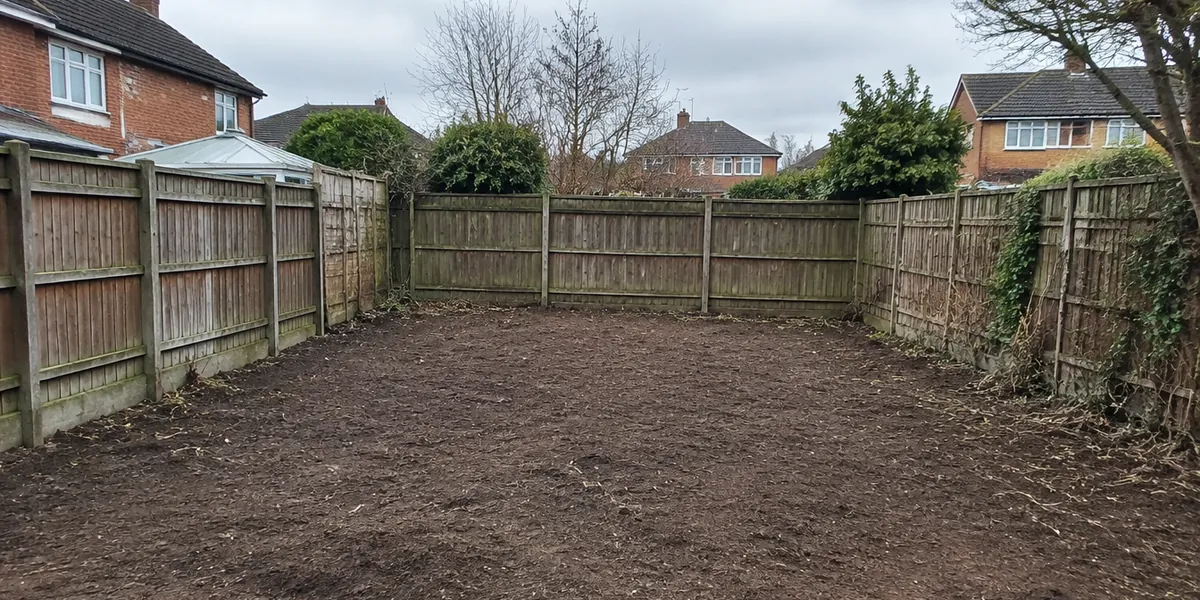
Where We Offer Scrub Clearance
Scrub is the woody, thorny, tangled layer that takes over first: bramble, dog rose, hawthorn and blackthorn seedlings, elder, buddleia, sycamore and ash saplings, and ivy running through all of it. Scrub clearance is the right choice when you cannot walk to the end of the garden, when fences and sheds have disappeared, or when a plot in Glossop has been untouched for several years.
We work in layers. First the brushcutter with a blade, not a line, cuts bramble and nettle to the ground in swathes. Then loppers and a pruning saw take out the saplings and shrubs at the base; anything with a trunk is felled with a chainsaw in sections. Ivy is cut at ground level and again at head height so the upper growth dies and can be pulled off later without tearing fences or render. Everything woody goes through the chipper.
The part that matters is what happens below ground. Bramble crowns are dug out with a mattock, sapling stumps are ground or winched out, and the root plates of larger self-seeded trees are removed where access allows. Leaving stumps means a hedge of regrowth within months. Dense scrub cut between March and August is checked carefully for nesting birds first. What affects the result is the age of the scrub, the ground conditions, whether a tree preservation order covers anything that has grown large, and how thoroughly the roots can be removed.
Overgrown Bed Clearing
Once the scrub is down, the beds are revealed, and they are usually a mat of perennial weed with the remains of a planting scheme buried in it. Overgrown bed clearing takes those borders back to clean soil, ready for mulch and replanting. It suits gardens in Glossop where the structure is sound but the planting has been lost.
We start by rescuing what is worth it. Roses, peonies, established shrubs, bulbs in leaf, fruit bushes and good perennials are marked, and anything that needs moving is lifted and potted up or heeled in elsewhere. Then the weeds come out. Annual weeds are hoed and raked. The perennial ones, bindweed, couch grass, ground elder, horsetail and creeping buttercup, are forked out slowly, following each root as far as it goes, because any piece left behind regrows. A rotavator would chop those roots into hundreds of cuttings and make the problem worse.
Soil is levelled and, where it has been compacted, well-rotted compost or manure is dug in. Lost bed edges are re-cut with a half-moon. The bed is finished with a 50 mm mulch that keeps the next flush of weeds down while you decide on planting. What affects the result is the weed species present, how long they have been established and the soil type.
Invasive Plant Removal
Some plants are not just overgrown but a liability. Japanese knotweed can affect a mortgage valuation and spreads from a fragment the size of a fingernail. Giant hogweed sap causes severe burns in sunlight. Himalayan balsam seeds explosively and colonises river banks. Running bamboo sends rhizomes under fences and up through patios. Invasive plant removal is the right call when you have identified, or suspect, any of these in a Glossop garden, or when a survey for a sale has flagged them.
Knotweed is handled differently from everything else. We do not cut it, chip it, dig it casually or put it in with green waste; all of those spread it. We confirm identification, mark out the stand with a buffer, keep all other clearance work away from it, and explain the options. Those are usually a specialist herbicide programme over more than one season, or excavation and removal of the soil to a licensed facility.
Giant hogweed is cut with full protective clothing and never strimmed, as that throws sap. Balsam is pulled by hand before it sets seed in early summer. Bamboo is dug out with the rhizomes followed and removed, then a root barrier is installed if any is to remain. What affects the job is the species, how far it has spread and how close it is to boundaries and buildings.
What You Get When We Handle Your Overgrown Garden Clearance
A clearance crew with a strimmer and a van can flatten a garden in a day. A fortnight later it is green again, the knotweed has been chipped across the lawn and the bramble roots are still in the ground. Glossop homeowners use Glossop Landscaping & Driveways because we clear with the next step in mind. Roots and stumps come out, worthwhile plants are saved, and invasive species are identified and contained rather than spread.
We know the rules on nesting birds, tree preservation orders, conservation areas and controlled waste. We are a registered waste carrier and issue a transfer note for every load. We separate green waste, soil, rubble and rubbish so that disposal is honest and most of it is composted.
Because we also build gardens, we can take the plot from cleared to finished: a new lawn, a patio, a driveway at the front, a planting plan, or simply a schedule of Seasonal Garden Clearance so it never gets this far again. Quotes are written after a site visit, and our work carries a written guarantee.
Our Overgrown Garden Clearance Process
- Survey. We walk the garden, identify invasive plants, protected trees and anything worth saving, and check access for waste and machinery.
- Written quote and date. The quote covers labour, any stump grinder or chipper hire, and disposal; heavy scrub is scheduled outside the nesting season.
- Mark and protect. Plants to keep are flagged, knotweed stands are fenced off with a buffer, and neighbouring boundaries are checked.
- Cut. Scrub is brushcut and felled in stages, ivy severed, and woody material chipped on site.
- Roots and stumps. Bramble crowns, sapling stumps and perennial weed roots are dug, ground or winched out.
- Beds and surfaces. Beds are cleared to soil and mulched, lawn areas are exposed and cut, paving and paths uncovered and swept.
- Remove and hand over. Waste is loaded and taken away, you receive a transfer note, and we talk through what the garden could become.
A heavily overgrown garden in Glossop typically takes two to five days for a team, longer where stumps are large or knotweed treatment has to be coordinated.
How Overgrown Garden Clearance Is Priced in Glossop
The density and age of the growth drive most of the cost. Two years of bramble is cut and dug in a day; ten years, with self-seeded trees that need felling and stumps grinding, is a different job. Mature saplings that have become trees may also need checking against tree preservation orders before they can come out.
What is underneath matters. A garden in Glossop with a lawn and simple beds is quick to finish once cleared; one with buried paving, old sheds, dumped rubbish or a collapsed fence takes more sorting and more waste streams. Perennial weeds such as bindweed and ground elder add forking time, and invasive species add specialist handling and controlled disposal.
Access is a large factor. A side gate wide enough for a wheelbarrow and a chipper is ideal; a terraced house with everything carried through the hall is slower. Machinery hire for stump grinding or a mini digger is shown on the quote where needed, and the volume of waste, and how much of it is soil and rubble, changes the disposal element. All of it is set out in writing before we begin.
Overgrown Garden Clearance Around Glossop
We clear overgrown gardens in every part of Glossop. If you have a long plot in Hadfield or Charlesworth, the job may include self-seeded trees at the far end and years of bramble between. If your garden in Simmondley can only be reached through the house, we plan the carry-out carefully. If your boundary in Gamesley has disappeared under ivy, we cut it back, and Padfield sees a lot of rental turnarounds where a plot has been left between tenants. We also clear in nearby Stalybridge, Hyde and Ashton-under-Lyne, and knotweed enquiries are answered from anywhere.
People in Glossop often ask us about seasonal garden clearance and garden waste removal at the same time.
Your Questions Answered
How long does it take to clear a badly overgrown garden in Glossop?
Most take a team of two or three between two and five days. The cutting is the fast part; digging out bramble crowns, grinding stumps and forking perennial weed roots takes the time. If invasive plants need specialist treatment, that runs over a longer period and we coordinate the rest of the clearance around it.
Will the bramble and weeds just grow back?
Not if the roots come out. We dig bramble crowns with a mattock, grind or winch sapling stumps, and hand-fork perennial weeds rather than rotavating them into cuttings. Some regrowth from fragments is normal in the first season and is easily hoed off. A mulch and a follow-up visit keep it under control.
Can you clear a garden in spring or summer?
Lighter clearance, bed clearing and weed removal can be done at any time. Dense scrub, hedges and ivy are checked carefully for nesting birds between March and August, and if birds are active we leave that section and return later. The heaviest clearances in Glossop are usually best scheduled from September to February.
I think there might be Japanese knotweed. What should I do?
Leave it alone and send us photographs of the stems and leaves. If it is knotweed we confirm it on site, mark an exclusion zone and explain the treatment and disposal routes, which involve licensed specialists over more than one season. We can clear the rest of the garden around it without spreading it.
Do you need planning permission or consent to clear a garden?
Clearing scrub, weeds and beds needs no consent. Felling or heavily cutting a tree may, if it is covered by a tree preservation order or the property is in a conservation area, in which case the council must be notified first. We check this on the survey and tell you before anything with a trunk is touched.